What will the bicycle of the future look like?
A bicycle without derailleurs, a frame printed on a 3D printer, and sensors that warn of wear and tear. What still sounds unusual is already being researched in Saxony. Not everything will catch on.
Read Aloud
0:00
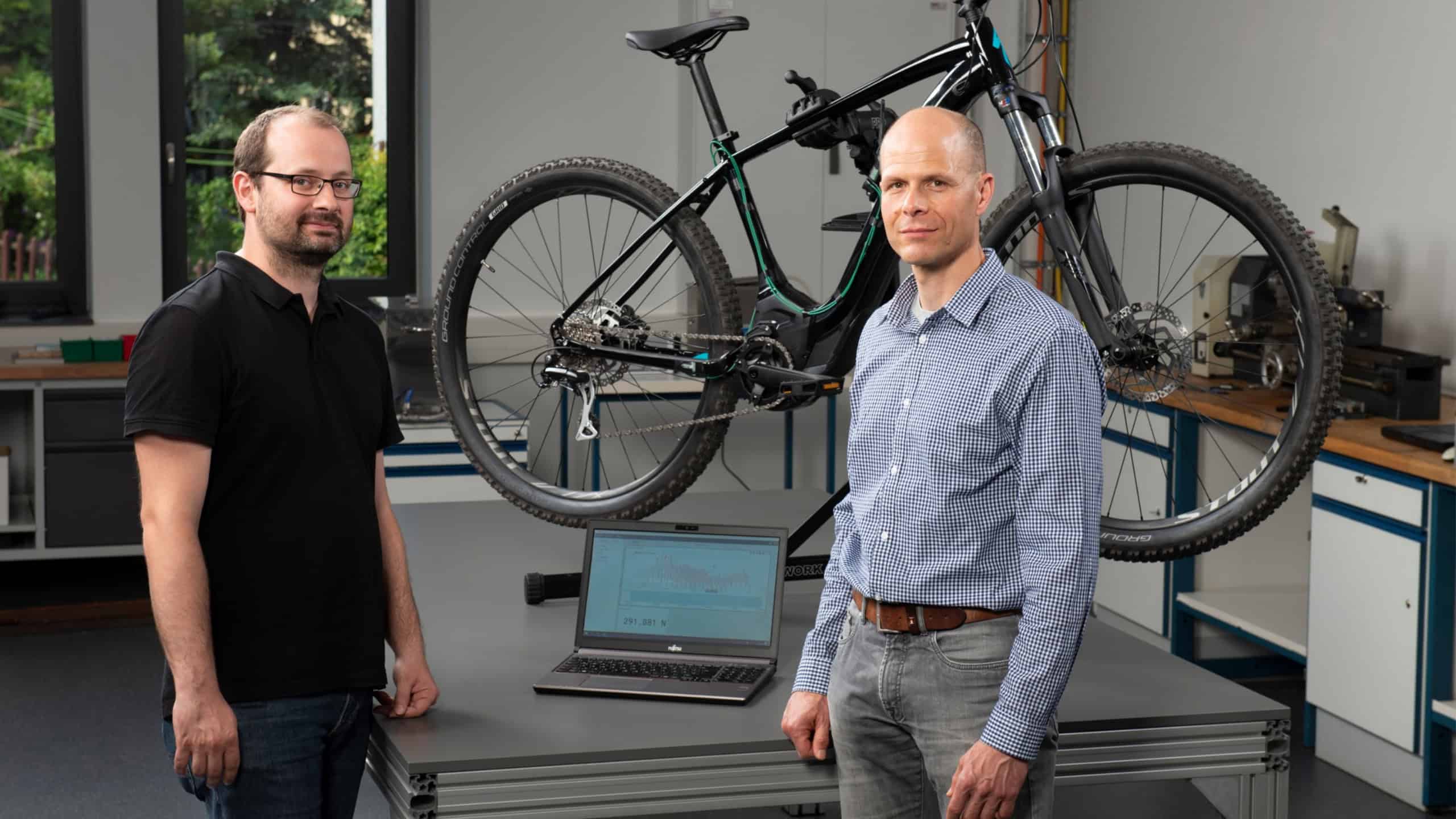
Prof. Jörg Hübler (right) and his colleague Dr. Hagen Bankwitz of Mittweida University of Applied Sciences are testing ideas for the bicycle of the future. © Schwarmat/Schulze
The first bicycle had no pedals. In 1817, Karl von Drais still had to propel his running machine with his feet. It was made entirely of wood – with wooden wheels, handlebars, and even a luggage rack. But that wasn’t the end of it. In 1867, the Frenchman Pierre Michaux presented a bicycle with pedals at the World’s Fair in Paris. From then on, people started pedaling.
For a long time, little changed in the basic design of the bicycle. People would glide along effortlessly or struggle, panting, up the next hill. But for several years now, electric bike motors have been revolutionizing cycling. Even at an advanced age, they make for a relaxed ride. And the development isn’t over yet. Researchers in Saxony are already working on the bicycle of tomorrow.
The end of the derailleur
In the future, the bicycle will still have two wheels, handlebars, a saddle, and pedals. “But technically, we still have a few innovations ahead of us,” says Jörg Hübler, professor of Intelligent Machine Systems at Mittweida University of Applied Sciences. He has been conducting research on bicycles for years. He is convinced that diversity will remain. City bikes, road bikes, mountain bikes, trekking bikes, and cargo bikes will continue to exist. “But by 2040, they will only be sold without a motor in the rarest of cases.”
The scientist expects major changes, particularly when it comes to the drivetrain. Today, the chain jumps from one sprocket to the next. It must be able to move sideways, and both the derailleur and the chain require maintenance and precise adjustment. “Derailleur systems will disappear,” says Hübler. Instead, the transmission could be integrated directly into the motor and automatically select the appropriate gear ratio. His team is already working on such integrated systems with partners.
This would not only simplify shifting but also make the drivetrain require less maintenance. A toothed belt could transmit the power, or a more robust chain that no longer has to switch between sprockets.
A frame from a 3D printer
Hübler’s team is conducting research not only on the drivetrain but also on the frame. They have reimagined – and 3D-printed – a mountain bike frame. Not the entire frame came from the 3D printer, but only the connection points where the tubes meet. These areas were specifically reinforced to withstand high forces. The tubes themselves are made of lightweight, fiber-reinforced plastic. The university presented the finished mountain bike at the Eurobike bicycle trade show in Frankfurt.

3D printing offers even more possibilities. Researchers can adapt the shape and structure of the joints, thereby better tailoring the frame to various requirements. This could make bicycles lighter, more resource-efficient, and more customizable. But Hübler tempers expectations. “Currently, 3D printing isn’t an advantage.” The process is too slow and expensive for large production runs. He sees its potential primarily in specialty parts, small production runs, and custom solutions.
Riding the test bike over cobblestones
A bicycle must not only be lightweight but also sturdy. Potholes, curbs, and cobblestones take their toll on it – as does a rider who doesn’t always treat it gently. Researchers at HTWK Leipzig are investigating the forces at work here.
At the BikeLab, Felix Kaule and his team have equipped a bicycle with sensors. These measure the stresses on the handlebars, seat post, and pedals. Then it’s out of the lab – over asphalt, cobblestones, through the woods, and over curbs. This is how the scientists collect data on everyday wear and tear.
Riding style plays a major role here. If you roll over a curb with stiff arms, you transfer the impact more strongly to the bike. If you absorb the shock, you protect it. Riding position and tire pressure also influence the stress on the bike. “That makes it difficult to predict the service life of a component,” explains Kaule.
The measured values are fed into a digital model of the bicycle. On the computer, the Leipzig team tests which areas are subject to particular stress, where the frame might fail, and where material could be saved. Bicycle manufacturers use such models to test new frames before building prototypes. The BikeLab has already taken on contracts from companies.
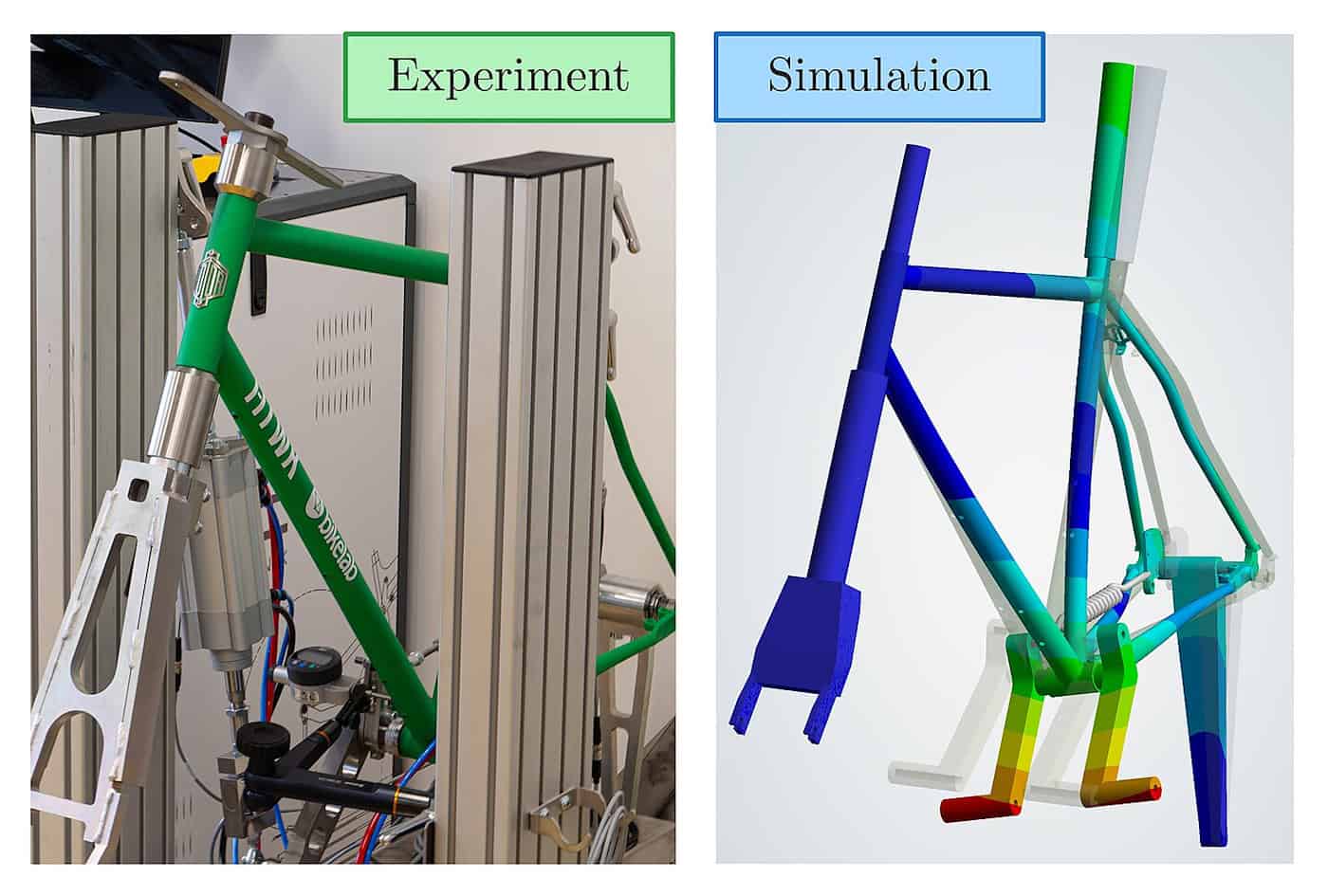
In the future, parts of the analysis could be integrated directly into the bicycle. A small computer could detect during a ride when a component is under unusually high stress and recommend maintenance. “But that’s still a long way off,” says Kaule.
Cargo bikes pose new challenges
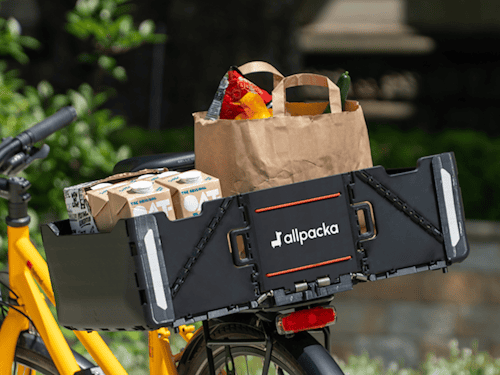
Today, bicycles are taking on tasks for which they were not originally designed. Cargo bikes transport children, groceries, or goods. Trailers introduce additional forces into the equation. That’s why Jörg Hübler’s team in Mittweida is developing new wheels for cargo bikes and trailers. Traditional spoked wheels are primarily designed to handle loads from above. Cargo bikes and heavy trailers, however, require solutions that can withstand stronger lateral forces.
The university plans to test the new technology’s performance in everyday use itself. Twenty e-cargo bikes are set to arrive on campus in Mittweida. Students and staff can use them, and the city is also involved. The bikes were developed by students. First came the bike, then a luggage rack system, and now a weather cover.
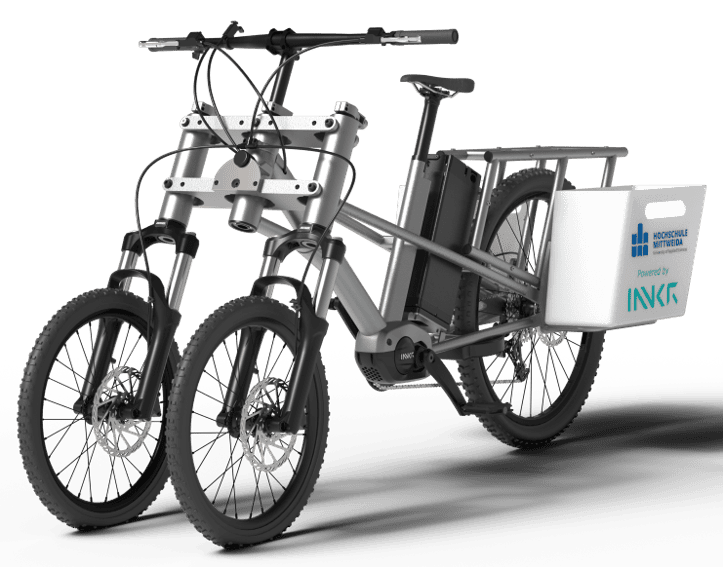
"It’s wet and cold for half the year," says Hübler. "So the bike isn’t the first choice." The students want to change that. The city is becoming a test site. The university doesn’t just want to develop cargo bikes; it also wants to find out whether they’ll be accepted in a small town. Hübler sees a lot of ground to make up here.
What does the car want from me?
But even the best bicycle will continue to share the road with cars in the future. And those cars are becoming increasingly automated. That’s why Konstantin Felbel and André Dettmann at Chemnitz University of Technology are researching how cyclists recognize the intentions of other road users.
This happens all the time in everyday life. A car slows down, intending to turn. The person behind the wheel makes eye contact with the cyclist who wants to cross the street. Such signals help cyclists make decisions. But with automated vehicles, this communication could be missing. Perhaps soon there will be no one behind the wheel whose gaze can be interpreted. The researchers in Chemnitz want to find out what cyclists pay attention to today.
Participants in their study ride their usual routes for a week. Using a smartphone and microphone, they comment as they ride: What do I see? What do I think the car will do? How can I tell? The researchers want to capture their thoughts in the moment, rather than reconstructing them later. “We can’t read their minds,” says Felbel. “So we let the cyclists describe what’s going on in their heads.”
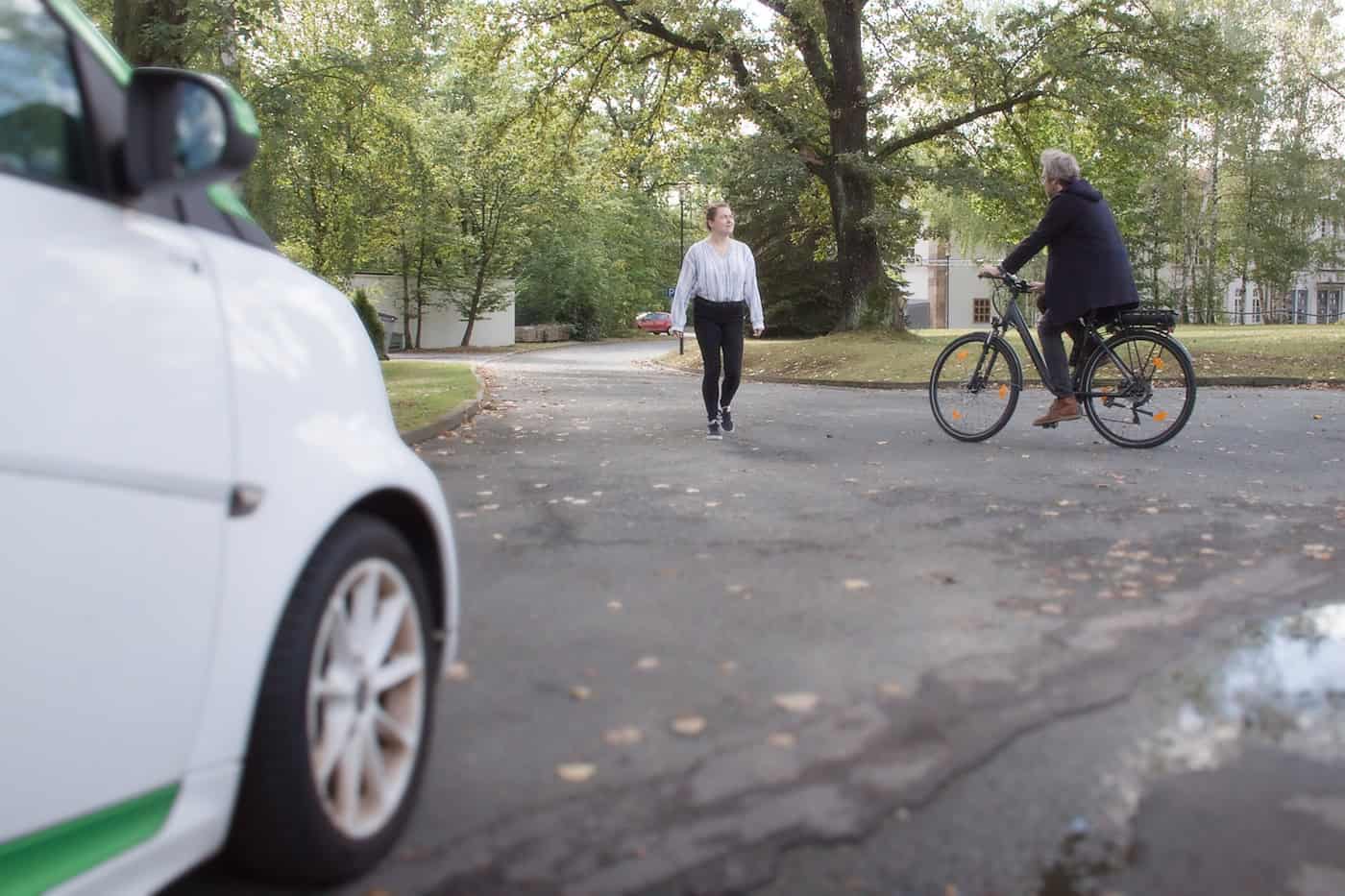
The statements are analyzed and categorized according to patterns. Is the car braking? Is it accelerating? Is it staying in its lane? Is the cyclist making eye contact? The goal is to identify the most important signals. These findings could help program automated vehicles so that their behavior remains understandable to people.
An old principle with new technology
Not every idea from research will catch on. A project from Mittweida illustrates this: a hydrogen cargo bike. The scientists investigated whether a pressurized hydrogen storage tank could be integrated into the bike’s load-bearing structure. Technically, it worked, but Hübler does not currently consider this approach practical for cargo bikes. Research also means figuring out what has no future.
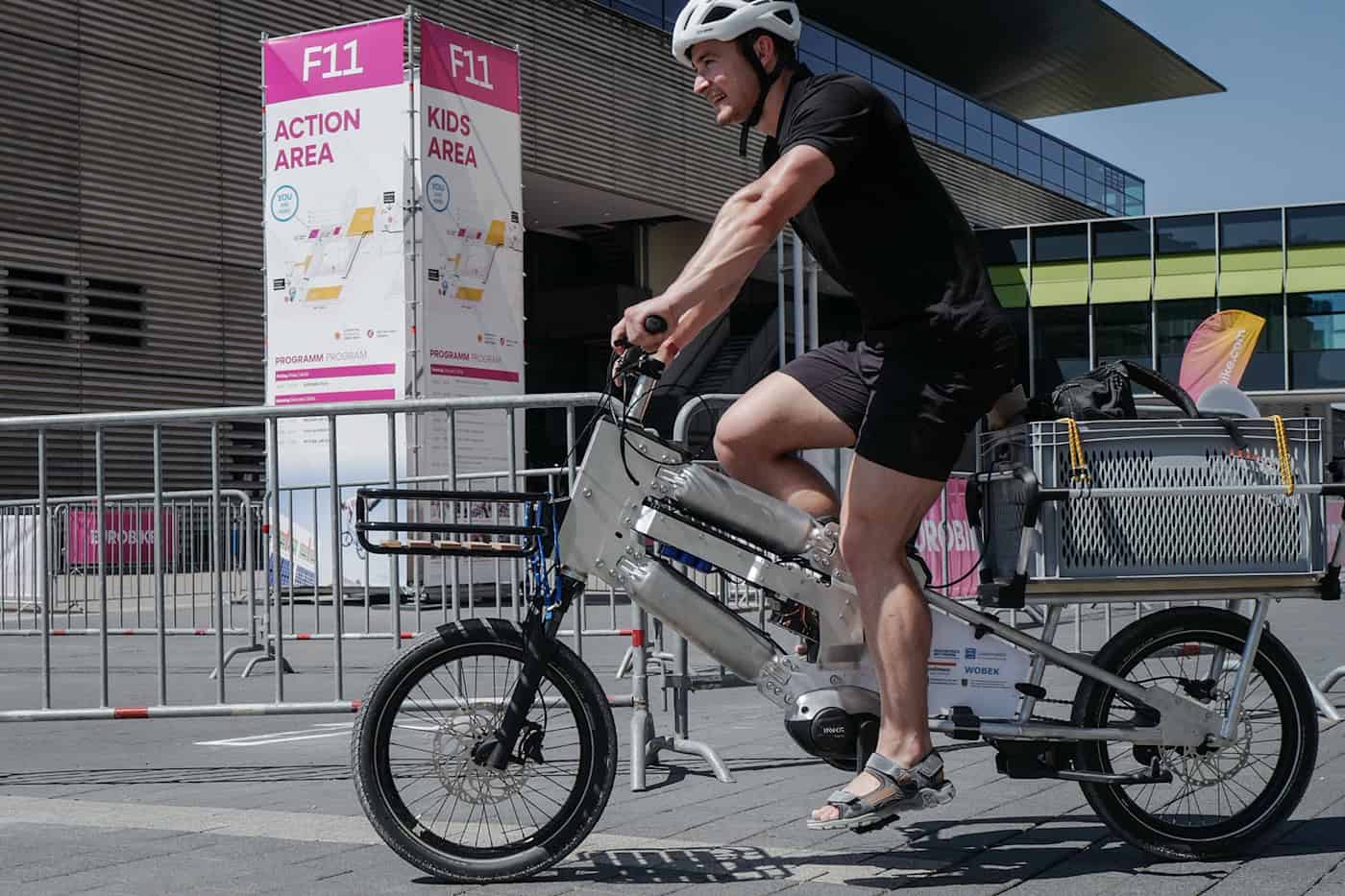
The basic principle of the bicycle has proven itself for over 200 years. New technology doesn’t have to make it more complicated. “We have to figure out what really makes the bike better,” says Hübler. “Lighter, more durable, safer.”