"Good cycling infrastructure is more than just a wide bike path"
Cyclists are willing to take detours even though they could reach their destination faster. Their GPS data reveals why they avoid certain roads. Sven Lißner is studying this phenomenon.
Read Aloud
0:00
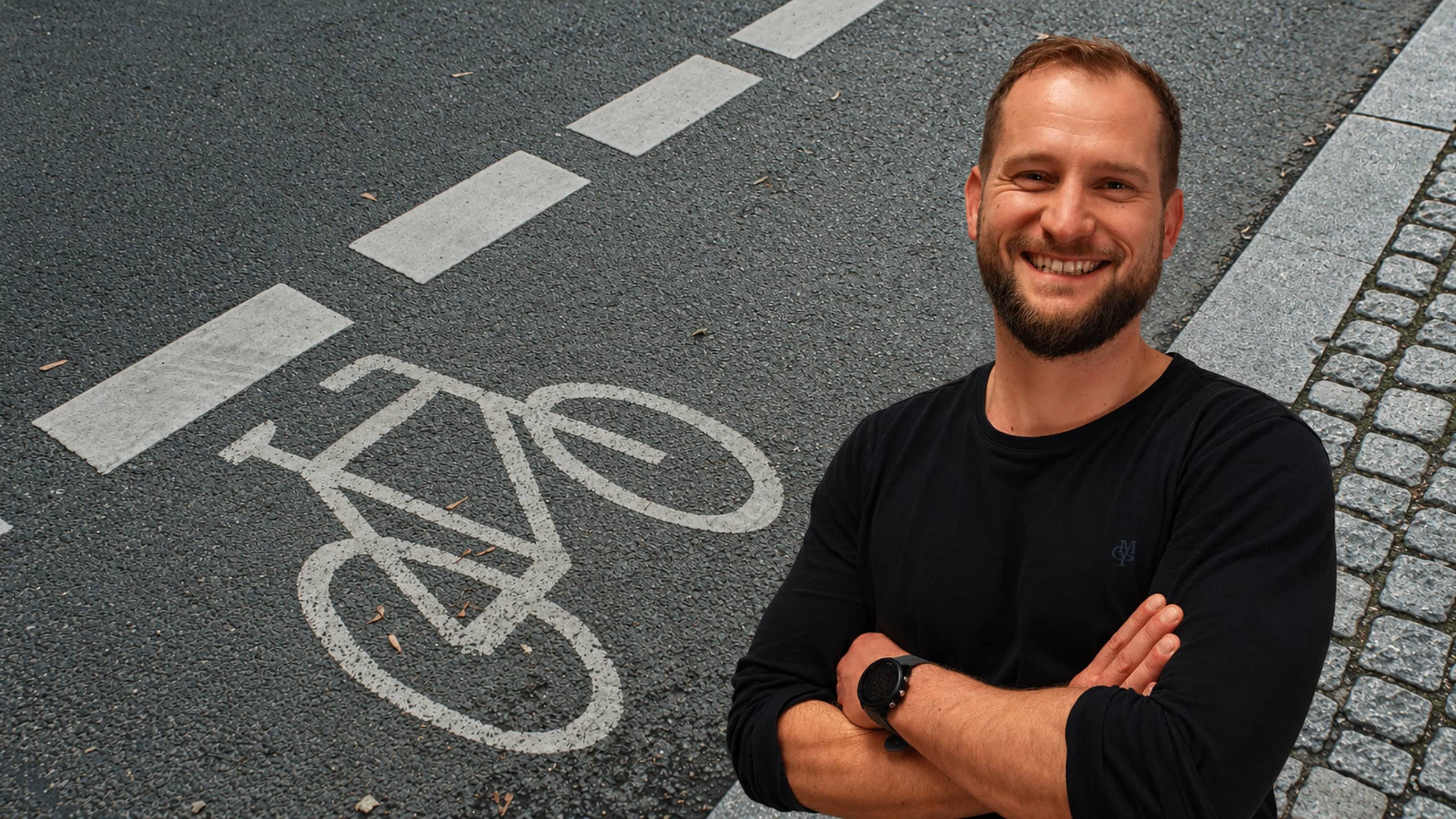
Why do cyclists choose certain routes and avoid others? Sven Lißner of TU Dresden is investigating exactly that, thereby also supporting local governments. © private
People have been riding bicycles for over 200 years. But where do they ride, and why? Sven Lißner is conducting research at TU Dresden on how people get around by bike and why they choose certain routes and avoid others. To this end, the transportation engineer analyzes, among other things, GPS data from cyclists. In this interview, the head of the “Bicycle Traffic/BikeLab” research group explains why a person’s sense of personal safety is often more important than accident statistics and why e-bikes are raising new questions for researchers.
Dr. Lißner, your bike is right behind your desk. You enjoy cycling yourself. What determines whether other people choose to bike a certain route or get in a car instead?
First of all, the options we have. The best motivator for cycling is not having a car. If a car is available, people generally cycle less. You see this with schoolchildren, too. For them, the bike is a way to get around on their own and with great flexibility – but if parents act as their personal taxi, the bike plays a secondary role here as well. It’s also important to consider what alternatives are available. How good is public transportation? Is there a school bus, for example? Then there’s the weather and, quite importantly, the question: How safe do I feel on my bike?
Objectively speaking, a road doesn’t have to be particularly dangerous. You say that the subjective sense of safety can actually be even more important for the decision. Why?
As a cyclist, I usually don’t know if there have been a particularly high number of accidents at a specific intersection. But I certainly notice when someone fails to yield the right of way to me three times in a row or passes me too closely. Such personal experiences carry more weight in my own decision-making than the actual accident statistics.
This also influences which route we take. Your data shows that cyclists by no means always choose the shortest route. What factors guide their decisions?
Distance plays a major role, but it’s really all about time. Cyclists are certainly willing to take a detour if it doesn’t significantly extend their travel time. In Dresden, the Elbe Cycle Path is a good example of this. It may be longer than the route along Leipziger Straße, but it allows for a more relaxed ride without constant stops at traffic lights and car traffic. Uphill sections, bike paths, and the purpose of the trip also influence route choice. Detours are more acceptable during leisure time than on the way to work.
Conversely, are there roads where your data clearly shows that cyclists actually don’t want to ride there?
Yes. When several negative factors come together, it’s very clear. Major thoroughfares without bike lanes, with heavy and fast-moving traffic, and poor road surfaces are a typical example. In Dresden, for instance, this is evident on parts of Königsbrücker Straße. There, cyclists tend to seek out alternatives in the secondary network.
You’re able to understand these decisions today because you analyze actual trips. How has this type of cycling research evolved?
We initially worked with data from the Strava app, which many cyclists use. However, that data was heavily skewed toward recreational and athletic use. Many men, mostly fast cyclists, and a lot of recreational rides. Later, we therefore selected about 200 people ourselves based on specific criteria and analyzed their trips. At the same time, we began collaborating with the STADTRADELN campaign. We’ve been using this data in various research projects since 2017. As a result, we now also have time series and can see how bicycle traffic is changing.
And does that even allow us to verify whether a new bike route actually makes a difference?
Yes. A good example is the Radroute Ost in Dresden. A lot has changed there for bicycle traffic in recent years. You can clearly see the impact in our data. The number of cyclists is rising, and bicycle traffic is shifting from major thoroughfares to infrastructure created specifically for that purpose.
Ultimately, this transforms mobility data into planning data. Is your research now also helping local governments?
That was our goal from the very beginning. Few local governments, like Dresden, have multiple staff members dedicated to cycling. That’s why cities and towns need data that can be easily visualized and used to make initial assessments. This can simplify the planning process. We’re now working with nearly 100 municipalities to varying degrees.
However, the STADTRADELN initiative mainly attracts people who already ride bikes. So what do you learn about those who prefer to leave their bikes at home?
Of course, this doesn’t automatically mean we have data on everyone. But if we create good conditions for everyday cyclists, these conditions will also benefit people who don’t currently cycle regularly. And then they might be more likely to switch and say: “Under these conditions, I’d rather ride a bike than drive a car.”
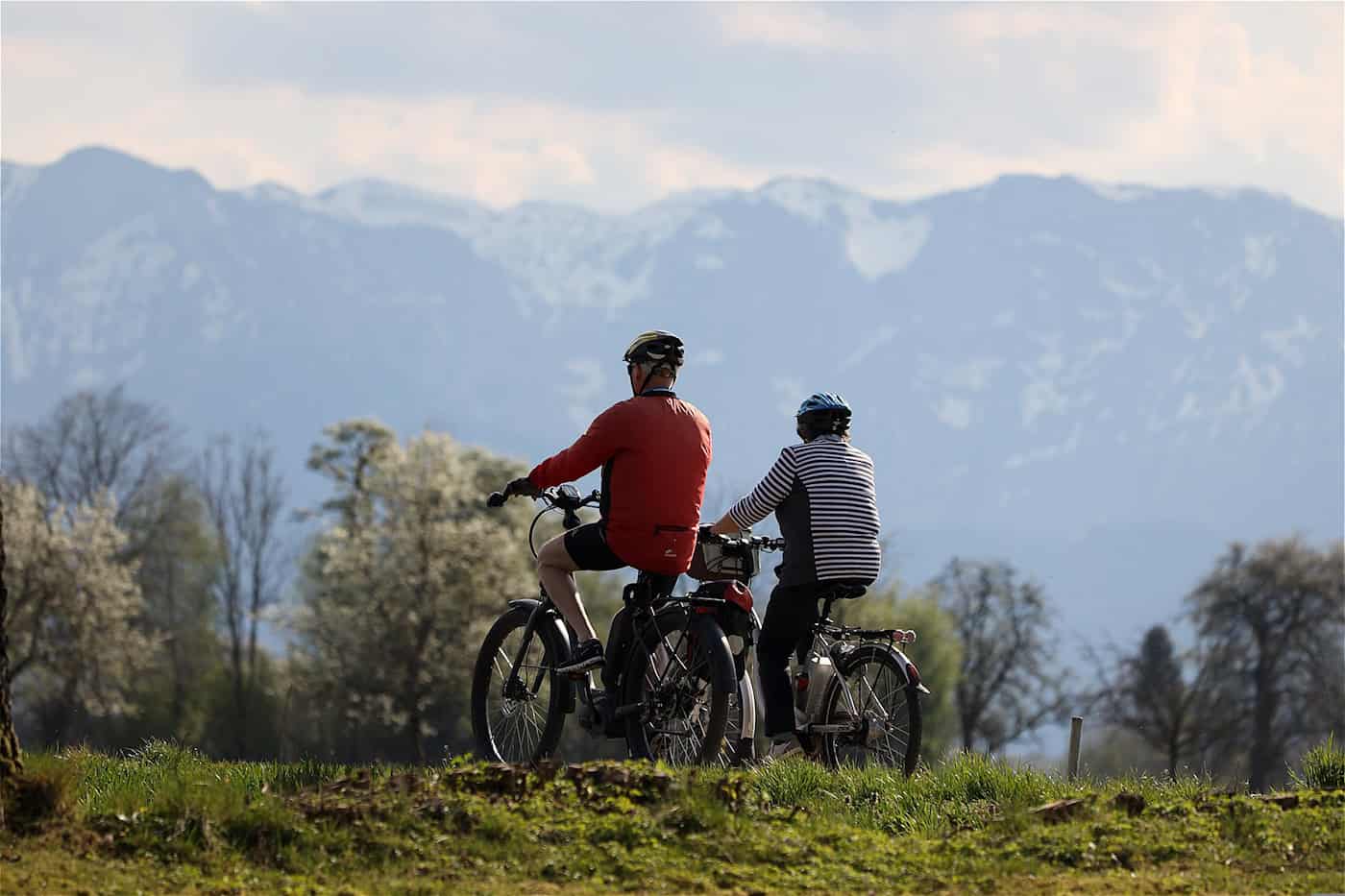
E-bikes are opening up new possibilities today. At the same time, they raise new safety concerns. Which ones are of particular concern to you?
Starting this year, participants in STADTRADELN can specify which type of bike they use. We therefore want to look at e-bike and traditional bike rides separately and find out where the differences actually lie. Another important issue is single-vehicle accidents, especially among older people riding e-bikes. We need to better understand what causes this: is it the riding conditions, higher speeds, the weight of the bikes, or perhaps the fact that someone gets back on a bike after ten years and immediately uses a high-performance e-bike.
Should cities then gear their infrastructure more toward e-bikes in the future?
I would caution against placing too much emphasis on e-bikes in planning. We must always ask: Who are we actually building for? Take a rural community, for example, where a path over a hill might be an alternative for e-bike riders to a new bike path along a federal highway. But if we want students to be able to ride their bikes safely there, we can’t assume that every child owns an e-bike. In that case, a proper bike path along the state highway may still be necessary.
We talk a lot about new bike paths. Would that solve all the problems for cyclists, or what else is needed?
Good bike infrastructure is more than just a bike path that’s as wide as possible. In Copenhagen, you can see what else is involved. For example, cyclists remain at the same elevation at intersections; there’s a “green wave,” and even trash cans that you can use while on your bike. Curbs that slope down and cobblestone surfaces also play a role in how pleasant a route feels. It’s the many small details that come together to make cyclists feel good.
How will we ride bikes in the future, and how much technology will be involved?
The rise of electrically assisted bicycles and the increasing use of technology are likely unstoppable. ABS is being discussed, driver-assistance systems are being tested, and e-bikes are becoming more and more powerful. At the same time, this is causing the bicycle to drift somewhat away from what actually defines it. It’s technically simple, easy to repair yourself, and can be very affordable. We should be careful not to create technical requirements in the future that a bicycle must meet in order to participate in traffic. It is precisely this low-barrier access – the fact that practically anyone can use a bicycle – that we should preserve.
Conditions on our roads are also changing. Aside from infrastructure, what impact does the climate have? What do cyclists do in the heat?
These questions are becoming more important. In countries like France, Spain, or Italy, the question is already being raised as to whether bike paths need to be shaded more in the summer. At 40 degrees, someone who has a choice might be more likely to opt for an air-conditioned car. For cities, this could mean focusing in the future on creating green corridors, preserving trees, finding new ways to provide shade, and bringing more water into the city. The question will then no longer be just where a bike path runs, but also whether people will even want to use it as temperatures rise.