Allpacka: From a student flat to bike racks across Germany
It all started with a shopping problem. Today, Allpacka manufactures the foldable bike box in series production. Here’s why the journey from prototype to finished product was difficult.
Read Aloud
0:00
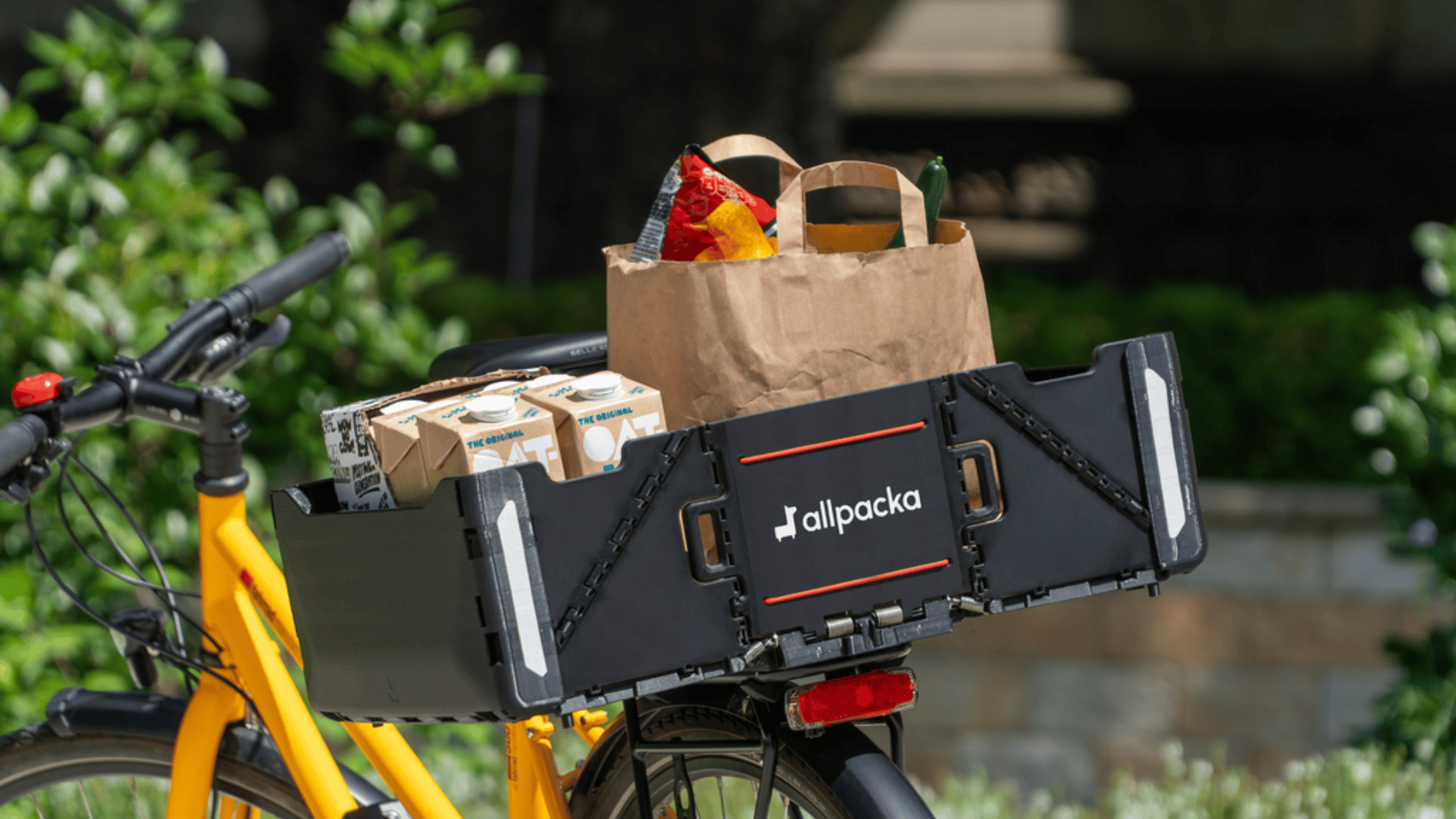
Where to put your groceries? The Allpacka One foldable cargo box offers 30 liters of storage space on a bike rack and can hold up to 20 kilograms. © allpacka GmbH
A quick trip to the supermarket after class. A few years ago, Lukas Ludwig studied electrical engineering at TU Dresden. At the end of the day, he often ran errands for his shared apartment. But he didn’t always have his bike bags with him. If his backpack was already full, it was difficult to carry everything on his bike. That was the starting point for the Startup Allpacka.
“Back then, we were looking for a solution together,” says roommate Daniela Weiß today. She was studying mechanical engineering. The two wanted to develop a transport box for a bicycle that could be unfolded when needed but otherwise took up hardly any space. The first prototype was built in 2020 on the terrace of their shared apartment in Dresden. It was made of wood and was still quite unwieldy.
But the idea wouldn’t let them go. Time and again, they modified the design, experimented with new materials, and improved the folding mechanism. A total of 24 prototypes were created in the years that followed. More than 20 testers covered over 5,000 kilometers using the various models. Their experiences were incorporated into the further development.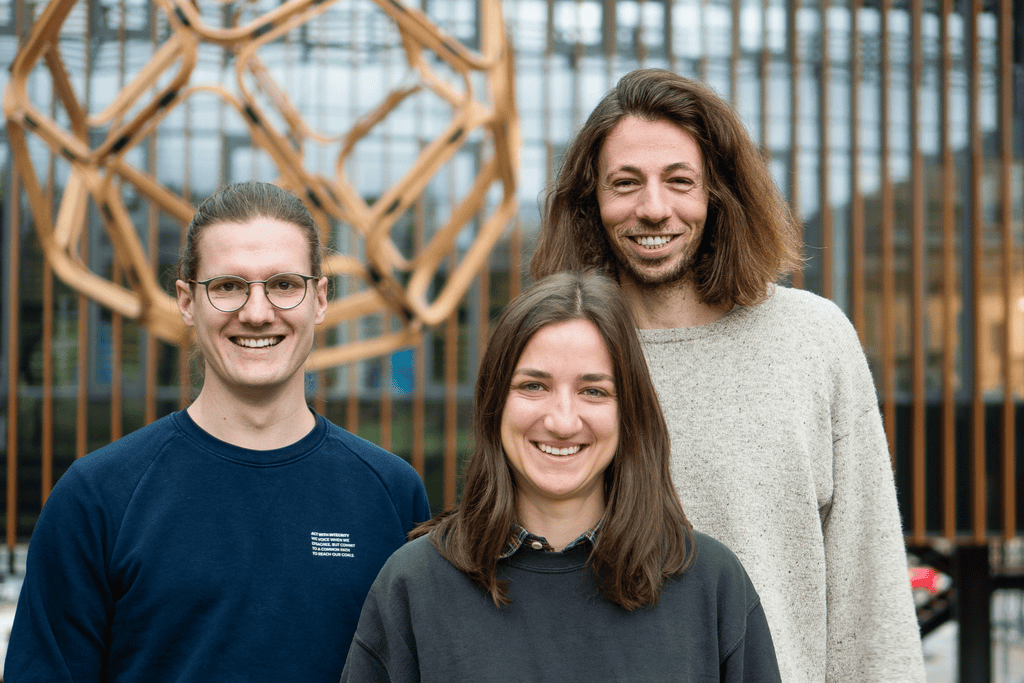
In 2024, Ludwig and Weiß finally founded Allpacka GmbH together with business administrator Jonathan Vincentz. A year later, the company received a German patent for its folding mechanism.
When a mistake occurs a thousand times
A crowdfunding campaign in the fall of 2024 already demonstrated that the invention was generating interest. Within the first hour, orders totaling around 30,000 euros were placed. After one month, the total had reached about 150,000 euros. More than 1,100 people supported the project. Later, around 500 additional pre-orders were added. For the founders, this was a success. At the same time, it meant they now had to deliver.
But turning an invention into a mass-produced product proved to be the next major challenge. “We knew it would be another huge undertaking. But the workload was immense,” says Weiß. The molds for the plastic parts, in particular, took a lot of time. They are manufactured using the injection molding process. Heated plastic is pressed into a mold, which repeatedly produces identical components. The mold itself is expensive and can only be modified later with great effort. “So it had to be perfect,” she continues.
Time and again, the team faced the choice of investing several more days in a detail or accepting a flaw. “But mass production doesn’t forgive mistakes. Otherwise, you’d have one in every product.”
30 liters in one second
Mass production finally began in August 2026. The plastic parts come from a specialized manufacturer in Germany, while screws, springs, and eyelets are sourced from other suppliers. The boxes are assembled at Allpacka itself, at assembly sites in Leipzig and Dresden. “When things are going well, we assemble up to 300 boxes a week,” reports the founder. This pace isn’t expected to continue indefinitely. First, the team has to work through the mountain of pre-orders. According to the company, more than 700 boxes had already been shipped by October.

The finished box is called Allpacka One. When folded, it sits compactly on the bike rack. It can be opened in a single motion within a second. This provides 30 liters of storage space. The box can hold up to 20 kilograms – enough, for example, for a case of drinks. This means that people who frequently need to transport items don’t have to go out and buy a cargo bike or a trailer right away.
Currently, the founders are working on improving the assembly processes and saving time by using their own tools. At the same time, they’re taking on tasks that were virtually nonexistent during the development phase. Customers are sending messages, asking questions about mounting, or providing feedback. Assembly instructions are already available, and a video is set to follow.
The issue of price
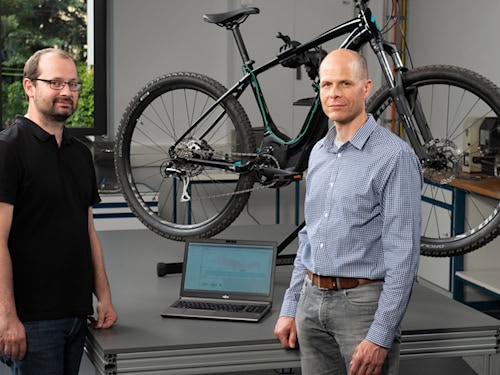
Another challenge is the decision to manufacture in Germany. The founders want to offer a durable product whose individual parts can be replaced as needed. The box is designed to be fully repairable. To test its durability, the team developed a test bench in collaboration with TU Dresden. This allows them to examine the stresses the design is exposed to in everyday use.
But manufacturing in Germany comes at a price. The most basic version of the Allpacka One now costs nearly 170 euros. Backers had paid significantly less during the Kickstarter campaign. At trade shows, Weiß notices that some prospective customers hesitate when they see the price. “I can understand that, but finding suitable suppliers and meeting our own quality standards – it all comes at a cost.”
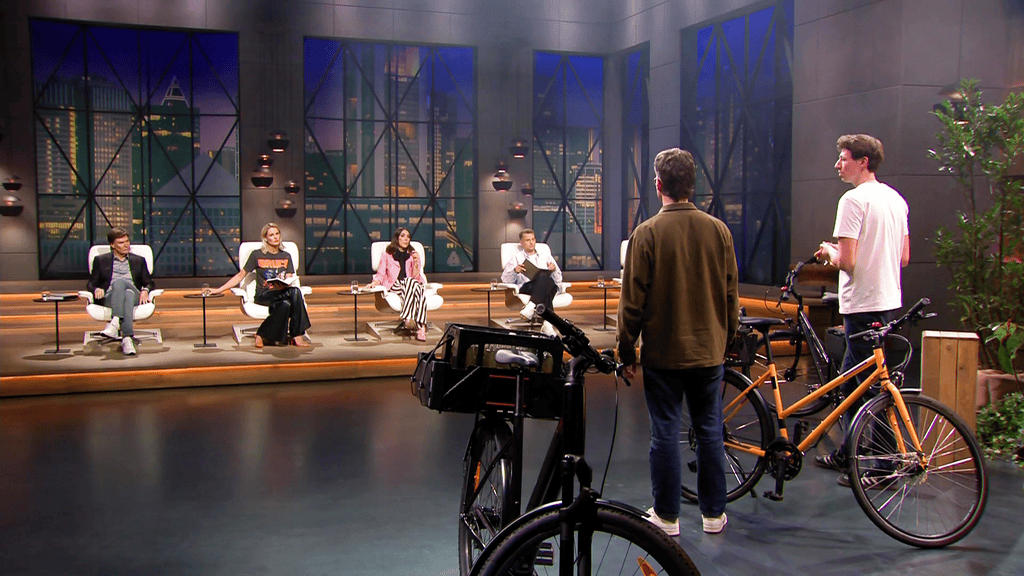
Allpacka is likely to gain additional attention now thanks to a television appearance. Lukas Ludwig and Jonathan Vincentz presented their invention on the VOX show “Die Höhle der Löwen” (The Lion’s Den).
The founders have no shortage of new ideas. They’re considering additional versions of the box and ways to create extra storage space on the front of a bicycle. They’re also looking for ways to make it even easier to combine their box with bicycle bags. “We want to get as much as possible out of a regular bicycle,” says Weiß.